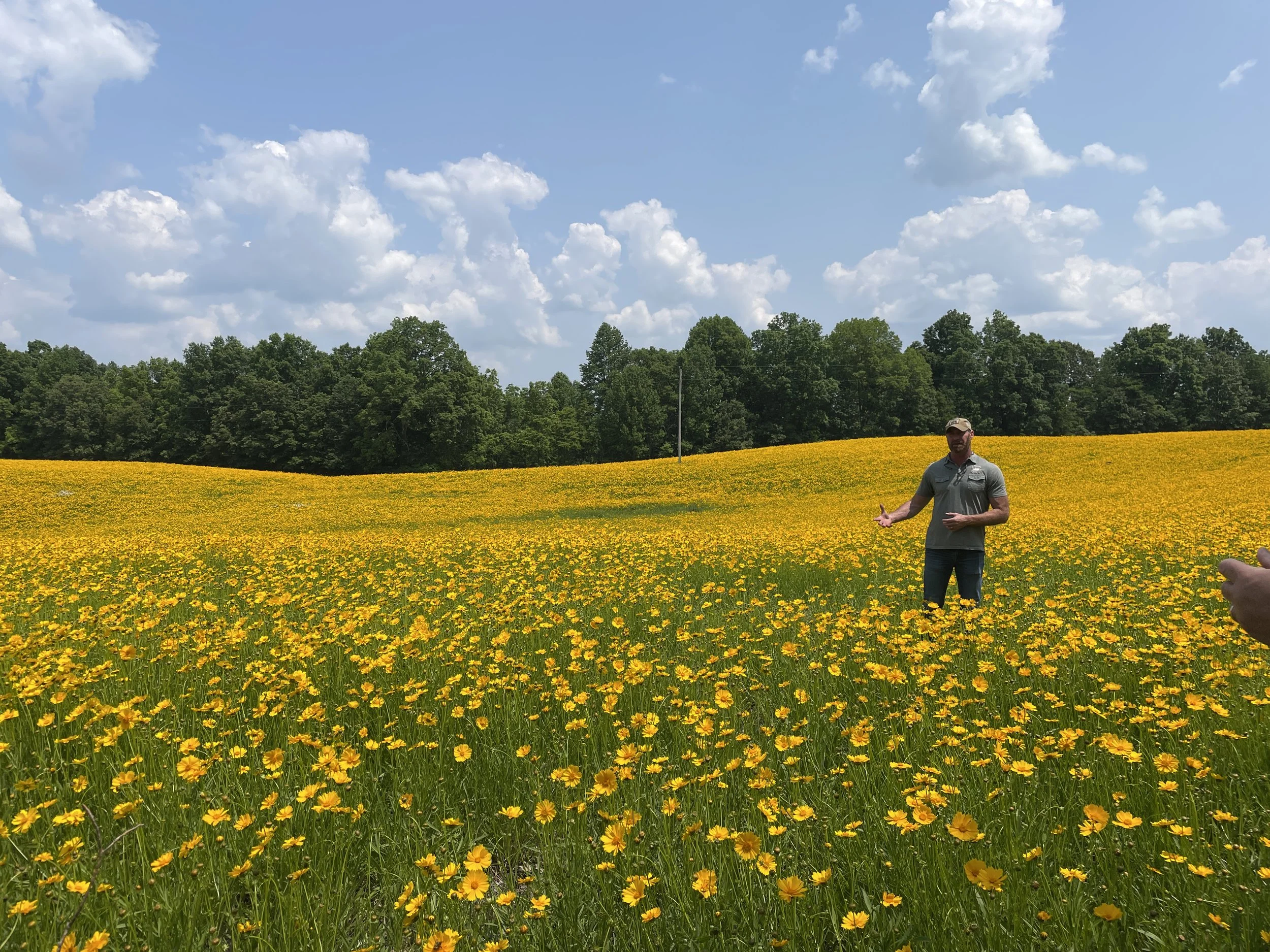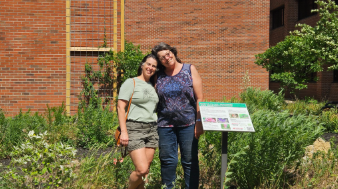
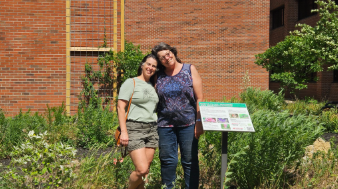
Jessica with Laura, SGI Volunteer Coordinator, at the APSU native plant garden.
Read SGI volunteer Jessica Bulling’s story of how she fell in love with plants and became passionate about restoring ecosystems.
We had just bought our first home and I had no idea what kind of trees and plants were in the yard. We had moved there the summer of 2020 and by 2021 my curiosity was building momentum. One morning it finally reached full intensity when I decided to clear some thorny brush. But what was it? Should I remove it? How much should I remove? Was it harmful or beneficial?
I posted the question in a Facebook group. The majority of the answers responded with Devil’s Walking Stick, but it did not seem right to me. I began searching for information about plants. Some of these videos were about grasslands, but who cares about grass? After a while the enthusiasm of these grassland videos began to capture my interest. Maybe I should listen to what this person, Dwayne Estes, had to say. After checking out the Southeastern Grasslands Institute website, everything they stood for made complete sense to me. In a summary, the naturally occurring biodiverse prairies of the Southeast had been lost due to several factors including farming, industrialism and urban development. How can we help? One avenue of support included searching for prairie remnants. I wanted to help find them! I promptly downloaded iNaturalist and began making observations.
It turns out that their headquarters in Clarksville was only 20 minutes away, and they needed volunteers. We were still in the middle of Covid, and I needed to get outside. I will always remember that first day I met the Volunteer Coordinator, Laura, and her friend and neighbor Sue. They were painting quadrant numbers around the Austin Peay State University Native Plant Teaching and Research garden so they could keep better track of the various types of plants. They turned out to become two of the most significant people in my life. That day was my introduction to the underappreciated, rich biodiversity of the Southeastern region.
My service with SGI included invasive plant removal at Dunbar Cave State Park as well as several visits supporting the new “Google Prairie” project and almost as importantly, maintaining and enriching the habitat in my own backyard. First I went after the invasive honeysuckle and planted a native coral honeysuckle. Then I went after the microstegium. Unfortunately these exotic species suppress local biodiversity. The best reward for the hard work of manually removing it at the end of a hot summer was enjoying a refreshed, biodiverse landscape the following spring. It is amazing to see what plants pop up once you remove the smothering monoculture of a plant that hasn’t evolved with the regional ecosystem over thousands of years.
Another rewarding venture was protecting a unique and endangered plant at Dunbar State Park known as Nabalus barbatus (Barbed Rattlesnake Root). In some miraculous way, because of that project, I was able to recognize the same plant growing in my own backyard. I placed cages to protect it from the deer and collect seedlings that same fall before moving away to Alabama.
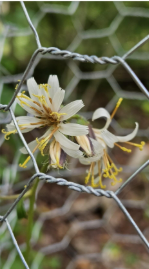
Barbed Rattlesnake Root (Nabalus barbatus) flowers through a wire fence at Dunbar Cave State Park.
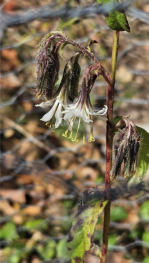
Barbed Rattlesnake Root (Nabalus barbatus) flowers and stem in Woodlawn, TN.
Another one of my rewarding accomplishments during my time in Tennessee was to become one of the initial members of Clarksville’s Healthy Yards Program. A city initiative to promote the use of native plants and the avoidance of pesticides.
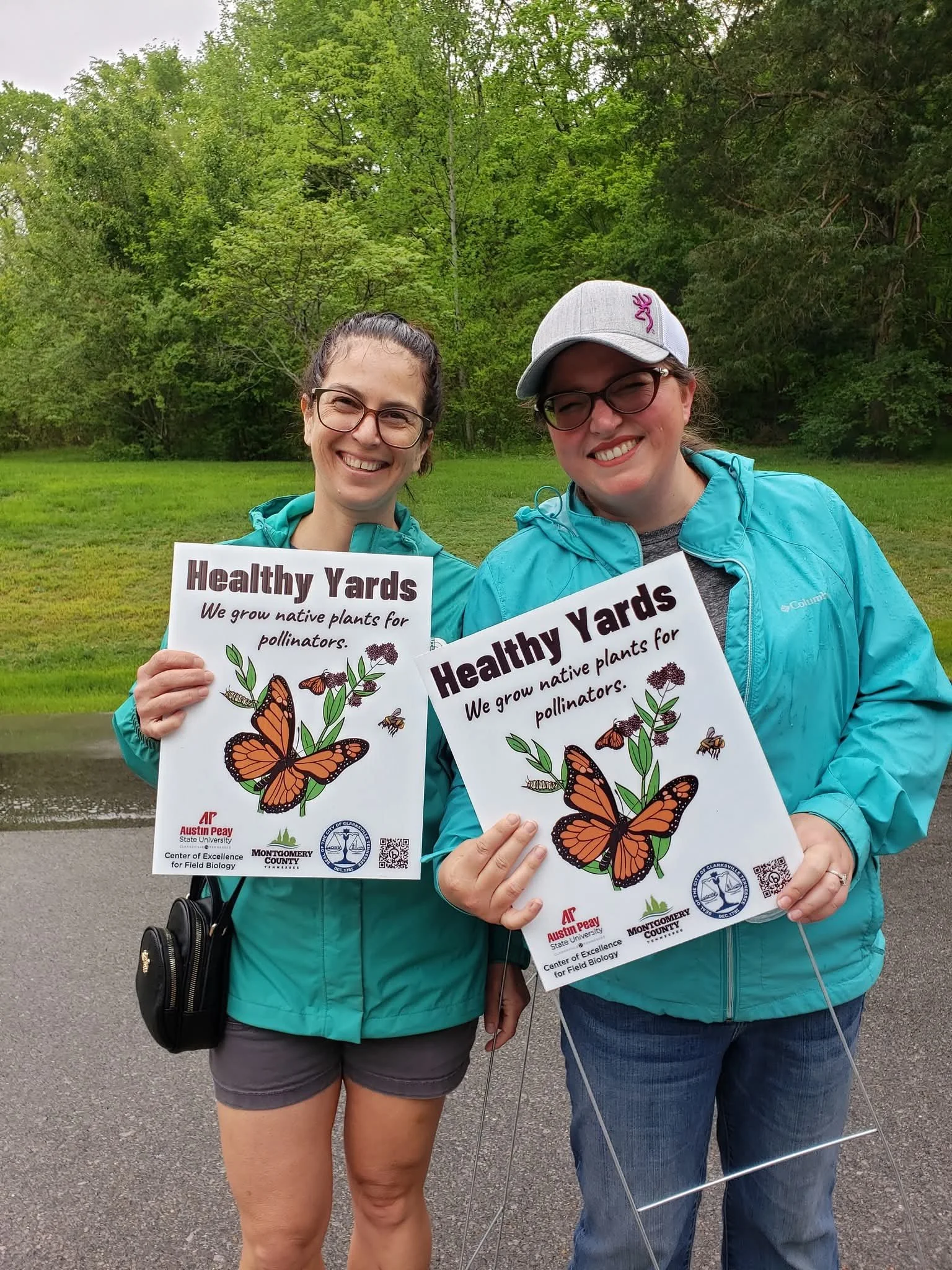
Jessica in April 2023 holding a Clarksville Healthy Yards program yard sign.
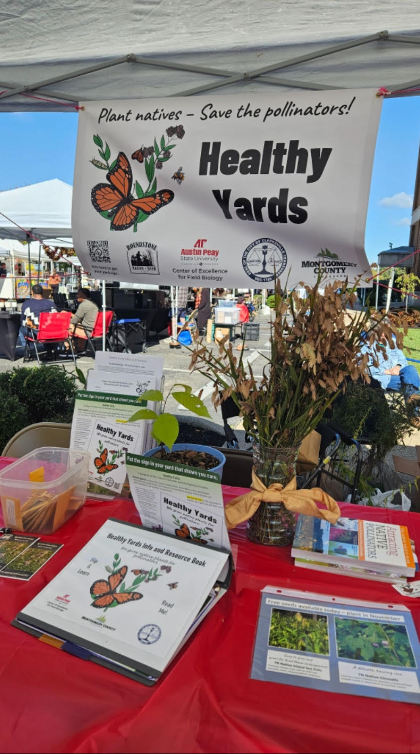
Clarksville Healthy Yards booth display.
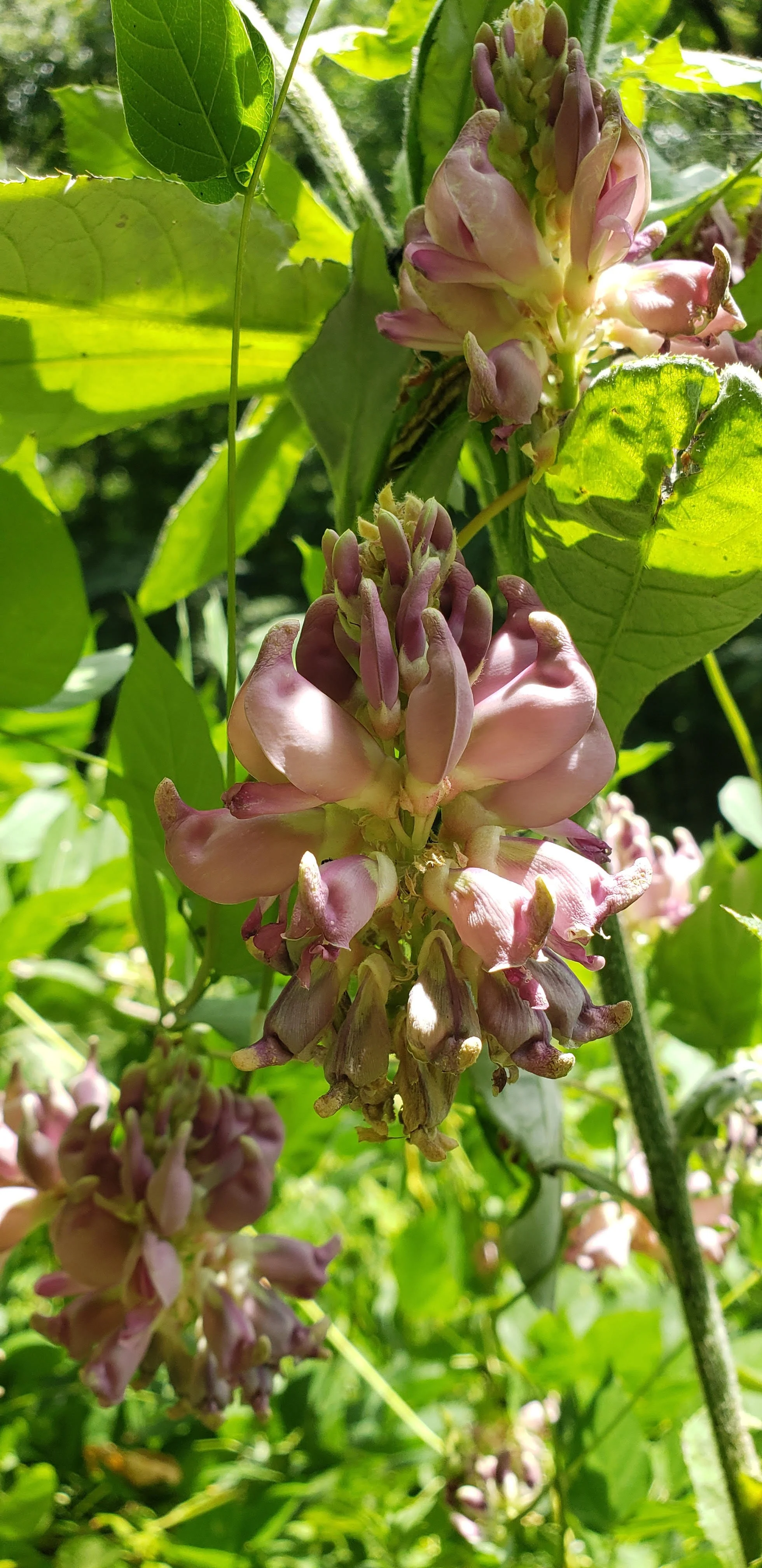
Up-close photo of the flowers of Price’s Potato Bean, Apios americana. Photo by Jessica Bulling.
I can’t leave the Tennessee era of my botanical adventures without mentioning the endangered Apios americana, Price’s Potato Bean. A stunning legume that requires a specific habitat. Apparently it only thrives on certain slopes of Land Between the Lakes National Recreation Area. I had the pleasure of donning a hard hat and zigzagging up these steep slopes in the middle of the southern heat to help count and document all the flowers we could find.
These are only a few of the rewarding experiences I had in support of the plant and community life in Tennessee. After three years in Clarksville, it was time to move to rural Russell County Alabama.
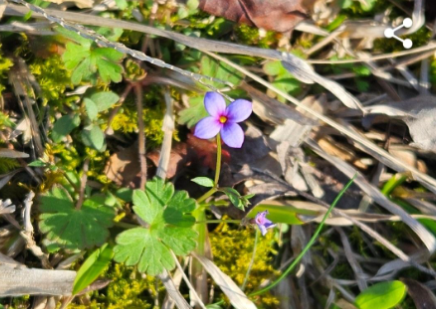
Image of the Tiny Bluet, Houstonia pusilla. Photo by Jessica Bulling.
Yes, we had found a nice plot thirty minutes southwest of Columbus, Georgia. Town consisted of two dollar stores and a drive thru folk art museum. What the heck was I going to do here? As we surveyed the property I looked into the forest. I would be ok in the forest. I checked the yard. One of the smallest spring ephemerals, a tiny bluet, looked at me. It was going to be ok, because they did not use pesticides in this yard :)
Back to the question of what was I going to do in rural Alabama? Somehow I came across an ad for Alabama’s Master Naturalist Program. After hearing so much about the wonderful Naturalist program from Laura’s friend Sue, in Tennessee, I immediately decided to register for the Alabama course. It was mostly online and I only needed to attend two Field Days in addition to 30 volunteer hours.
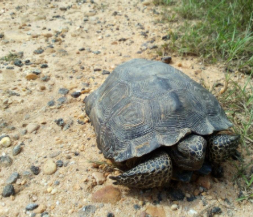
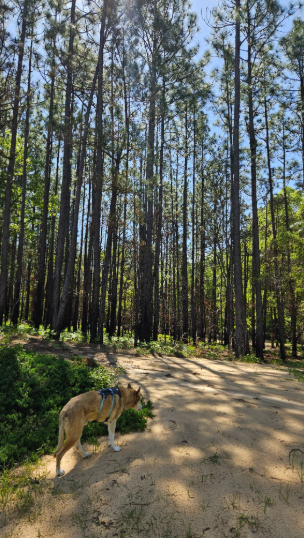
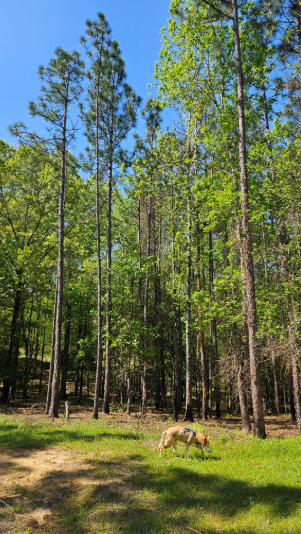
As I began studying the Naturalist modules, I noticed something amazing that spring. A giant pine cone. In our same neighborhood we had also spotted a gopher tortoise! We still had Longleaf Pines in our area and on the property. I immediately embraced the mission of doing my best to take care of these trees and their ecosystems that had dominated the South for thousands of years.
Pine trees can be very tricky to identify, even after staring at them every day and looking up diagrams and explanations, but gradually I became better at recognizing how beautiful they were. Of course they have very long needles, and the sound they make in the wind is loud enough to be reminiscent of ocean waves.
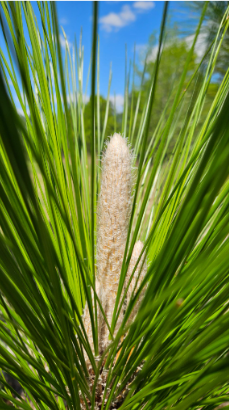
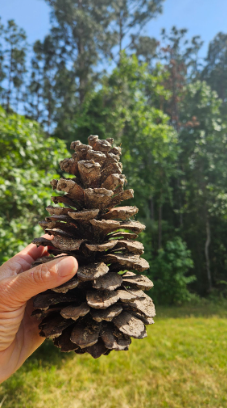
I love one of Janisse Ray's descriptions from Ecology of a Cracker Childhood: “The limbs of longleaf pine are gray and scaly and drape as the tree matures, and its needles are very long, up to seventeen inches, like a piano player’s fingers, and held upright at the ends of the limbs, like a bride holds her bouquet.”
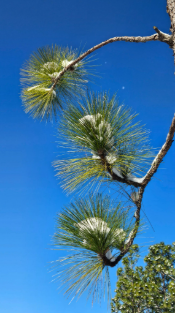
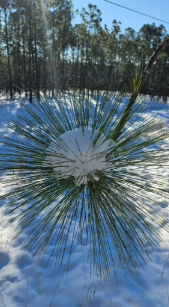
As beautiful as these trees are, they are what you might say high maintenance and require patience. They have evolved to burn. Anyone who has Longleaf Pines might notice how particularly flammable the needles are. Another name for these pines is heart pine, because the heart is rich with resin and can be used to maintain a good bonfire.
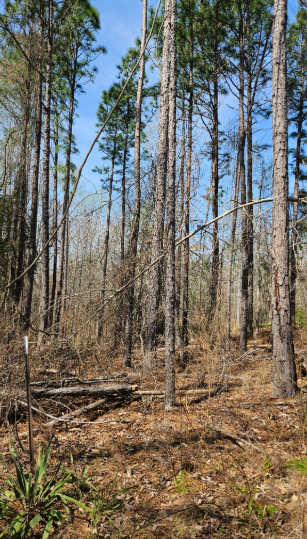
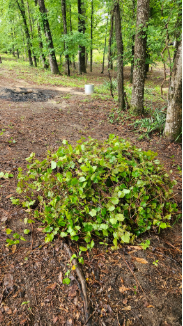
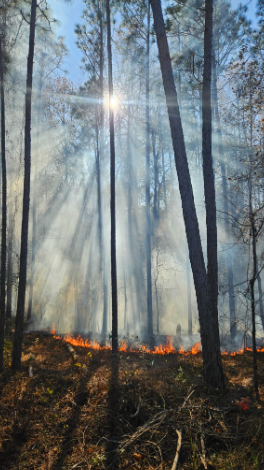
So it was apparent that these pines were overdue for a prescribed burn. The fast growing loblollies and sweetgums were moving in, there were fallen logs everywhere and the forest was thick with muscadine vines. Needless to say, we had a lot of work ahead of us. Over the course two years we did two prescribed burns (during the season it is permitted), something I had experience assisting with at the Google prairie in Tennessee with SGI. I tackled the muscadines and applied targeted herbicide on some sweetgums in the fall, the time of year this method is most efficient.

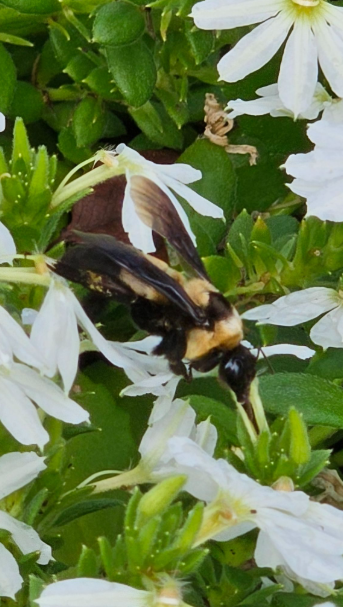
Bombus fraturnus (Southern Plains Bumblebee)
One of the special finds on this property was the endangered Bombus fraternus or Southern Plains Bumble bee. Thanks to iNaturalist, I realized that I had documented this bee when I first moved to the area, at the Columbus Botanical Garden.
This spring it was the carpenter bee that had caught my attention. I had finally decided to paint my garden hose stand and I noticed the perfectly round hole. Luckily it seemed ok and I’m looking forward to see its offspring emerge later this summer in search of the passionflower it is specialized for.
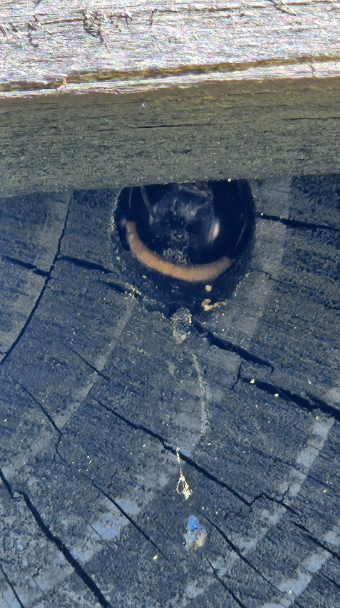
Carpenter Bee (genus Xylocopa sp.) looking out from his home in wood.
His home was right underneath the Coral Honeysuckle I had planted when I first moved here.
Thinking back to that first moment I wondered what all those trees in Tennessee were, and what the heck was that thorny bush in my yard, and should I remove it? I have come a long way. I have learned to enjoy the beauty that emerges from our protected habitats and the dance of relationships between animals and plants. I hope to continue to make connections with people who wish to do the same.
I finally did discover that the thorny bush was wild blackberry, which I mostly left for the birds and myself to enjoy.

Blog written by Jessica Bulling, SGI Volunteer. Blog prepared by Laura Hunt, SGI Volunteer Coordinator, and Ellie Lopez, SGI Communications Specialist.