Part I - Oaks on the Landscape

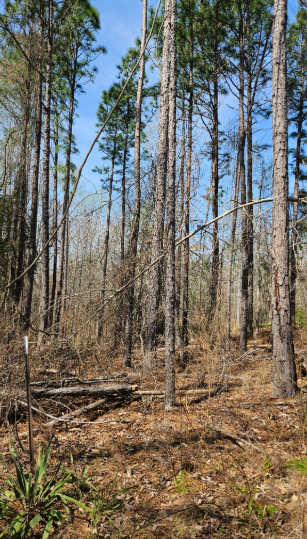
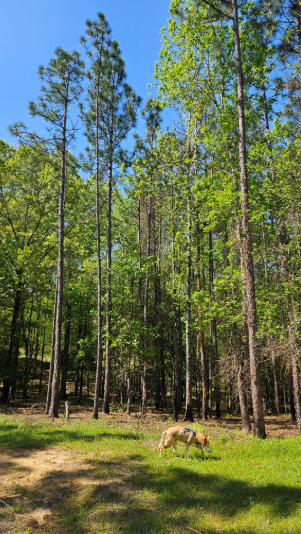
Photo of a Post Oak, Quercus stellata, savanna habitat in Franklin County, AR. Photo by Theo Witsell.
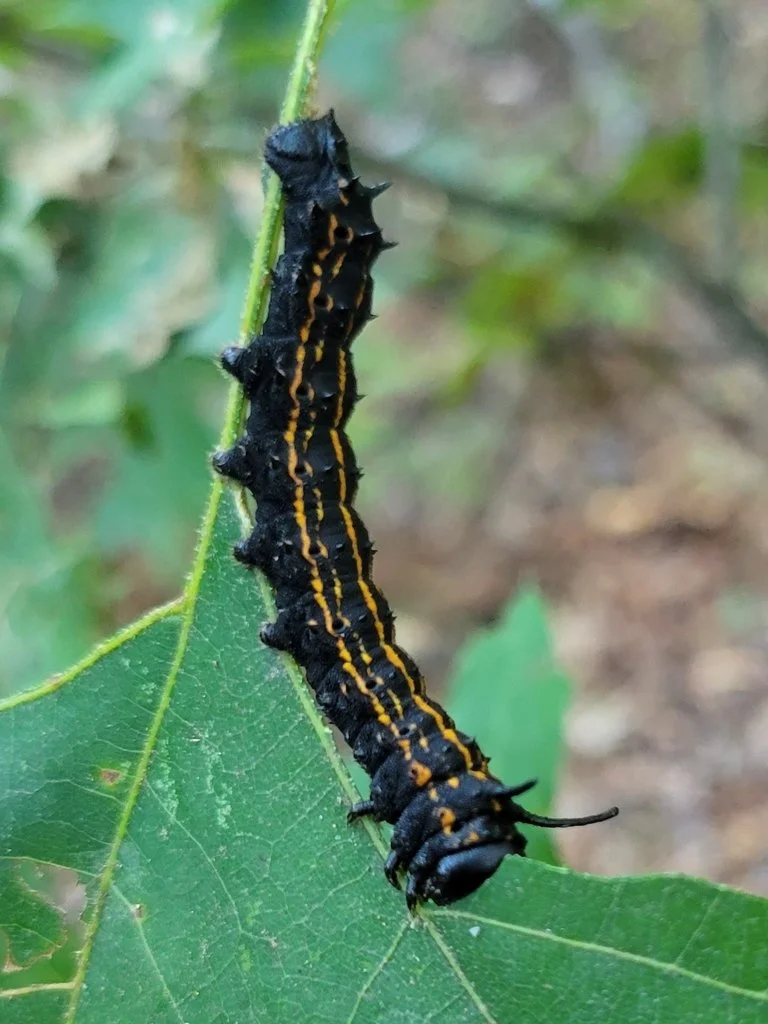
Caterpillar (larval) stage of the Orange-tipped Oakworm Moth, Anisota senatoria, captured on the Appalachian National Scenic Trail in MD, U.S. Photo CC0.
In the absence of the great American Chestnut, the Oak stands tall and mighty in today’s modern forest. Aside from their beauty, Oaks play a major role as a supporting player in multiple food chains. This comes in the form of foliage, insects, and fruits providing for insects, avians, and mammals alike. Many Oak species are larval host plants for butterflies, moths, weevils, gall forming wasps, and leaf-rolling insects. It is estimated that Oaks support between 400 and 900 species of insects. Oaks are larval host plants meaning that a species of Oak and a species of insect (butterfly, moth, weevil, etc.) have co-evolved with each other so that the immature stages of the insect (caterpillars and grubs) feed on the trees in order to become adults. Insects are able to evade the plant’s chemical defenses, sometimes using these to their advantage as poisons to protect themselves from things like birds, or to ensure no other insect is able to eat their host plant. Plants and insects are constantly co-evolving to try and get the upper-hand. The plant doesn’t want to be eaten; the insect needs a food source. A great example of this interaction that we commonly see is the Monarch Butterfly and Milkweeds (Asclepias spp.). Monarch butterflies lay eggs exclusively on Milkweeds as their caterpillars cannot survive on the foliage of any other plant. They have co-evolved together and are essential for each other. The adult Monarch Butterfly uses the Milkweed as a nectar source, pollinating the plant. The Milkweed provides a food source high in latex that the Monarch caterpillars can digest and ensure no other insect is taking its food source. It is a give and take for both of these species that helps ensure both of their survival. The same goes for many other insects in our world.
Birds during nesting season become almost entirely strict insectivores, as new baby birds have to consume large numbers of insects. Insects’ high protein, fat, and water content are essential for the survival of birds’ young. Oaks are a refuge for birds and the insects they eat, providing a consistent source of food — an interconnected web. In the winter, Oaks further support birds with a high fat, calorie dense fruit — their acorns. Many mammals rely on acorns, whose high fat content is essential to getting through winter. Humans have also relied on acorns as a calorie source for hundreds of years. Only recent access to processed foods have caused us to move away from foraging acorns as a food source.
Side note — Acorns contain high amounts of tannins that make them taste very bitter. Tannins can be harmful in large doses. Acorns must be leached of all tannins before consumption. Make sure to do your research thoroughly before attempting to return to your roots and forage these tasty nuts for yourself.
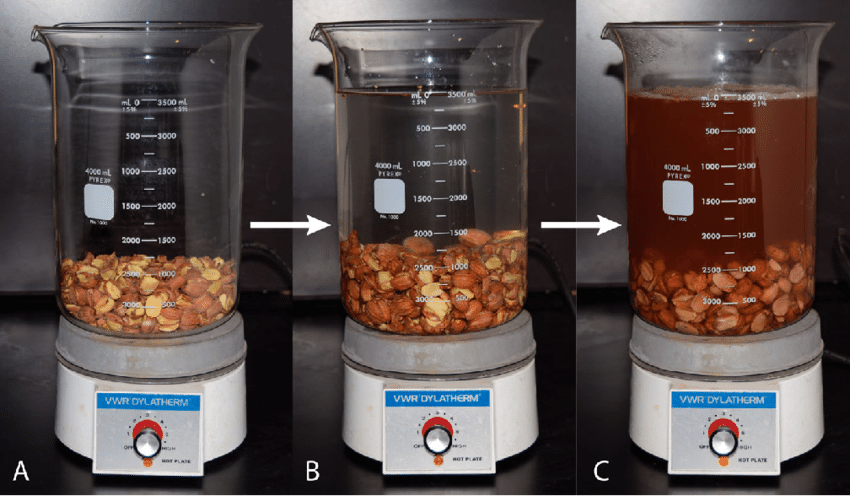
Photo from publication Acorn Processing and Pottery Use in the Upper Great Lakes: An Experimental Comparison of Stone Boiling and Ceramic Technology. (A) Shelled acorns in empyy PYREX beaker. (B) Room temperature water added to PYREX beaker with shelled acorns. (C) Opaque tannin-rich water after simmering for five hours.
Oaks come in two general classifications - red and white. These two classifications are generally easily distinguishable, with some exceptions. Red Oaks have a prominent “bristle tip,” the often sharp protrusion coming from each lobe of the leaf. White Oaks lack this bristle tip and have very rounded, smooth lobes. Not all oaks are easy to identify. Willow Oaks, Quercus phellos, have a leaf shape that might give would-be-Oak-identifiers pause as there are no lobes, only an apical tip to the leaf. However, upon closer inspection, you will notice a small protrusion, a bristle tip! Make sure to inspect all parts of the leaf thoroughly before labeling an Oak as red or white.
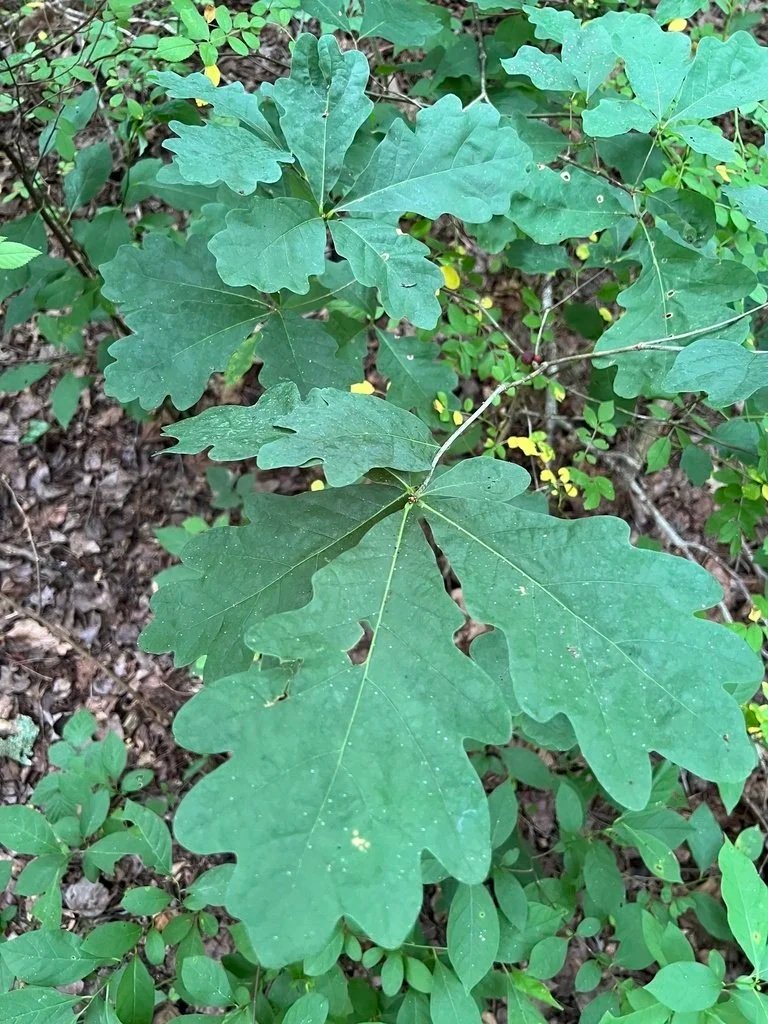
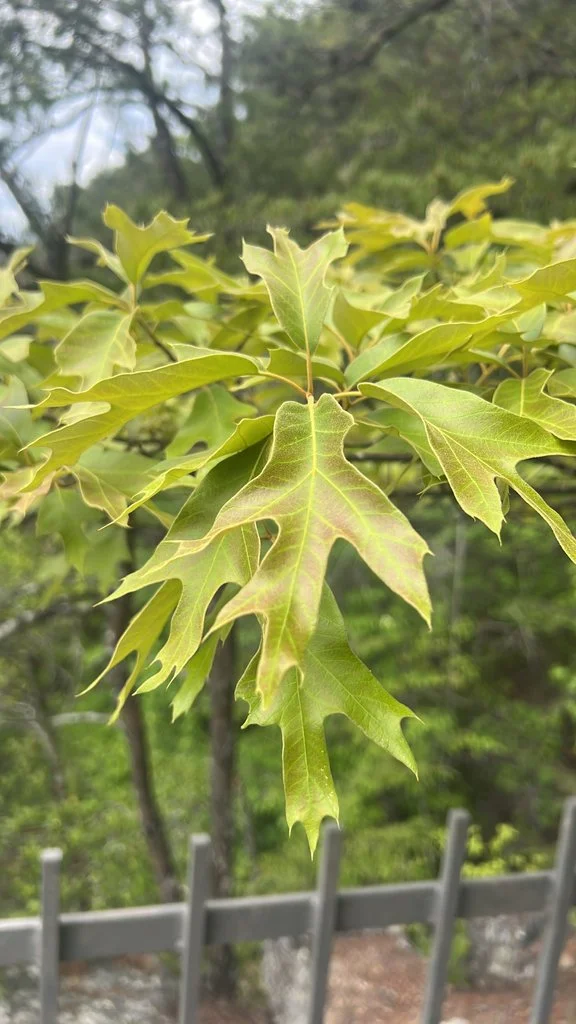
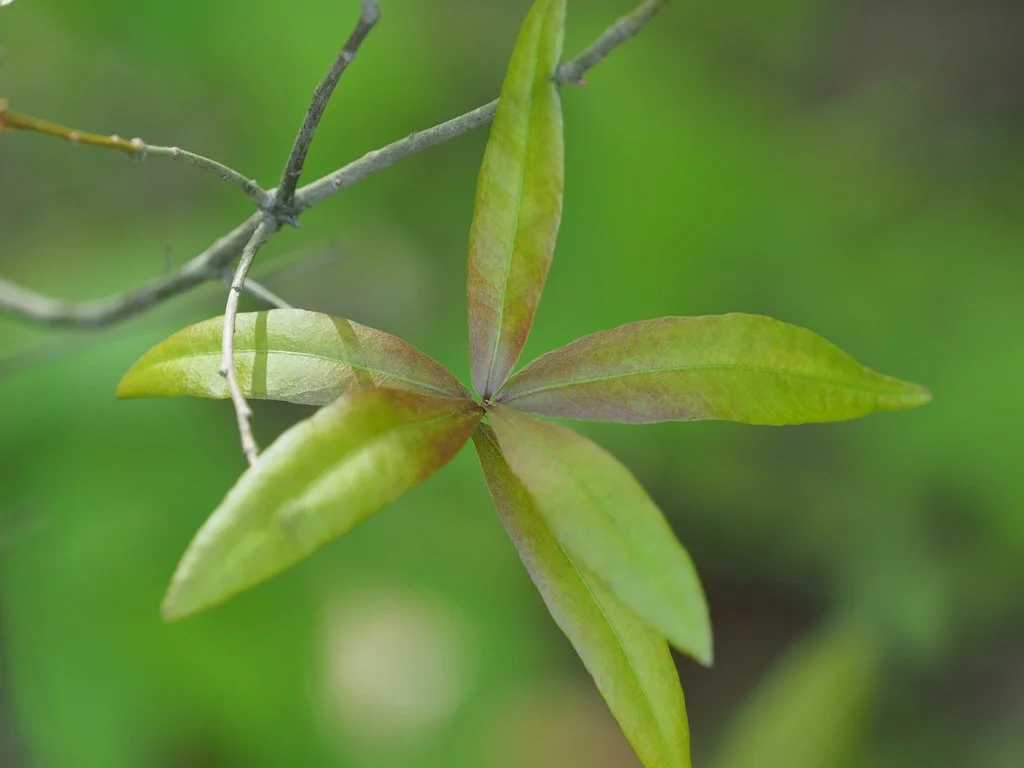
From left to right: 1. White Oak, Quercus alba, leaves. 2. Southern Red Oak, Quercus falcata, leaves. 3. Willow Oak, Quercus phellos, leaves.
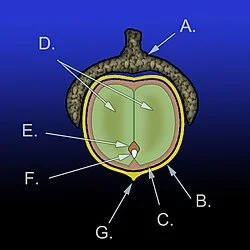
Diagram of the anatomy of an acorn. A.) Cupule B.) Pericarp (fruit wall) C.) Seed coat (testa) D.) Cotyledons (2) E.) Plumule F.) Radicle G.) Remains of style. Together D., E., and F. make up the embryo. Copyright KDS444, CC BY-SA 3.0, via Wikimedia Commons
Red and White Oak acorns also drop at different times of the year. Red Oak acorns fall from the tree in autumn. To ensure their survival through the winter on the ground, Red Oak acorns contain high amounts of tannins, making them bitter and unpalatable to many species. Others don't seem to mind as much! Squirrels have figured out how to eat around the endosperm (the part of the seed that becomes the plant) and consume the endosperm's food source, despite the high concentration of tannins.
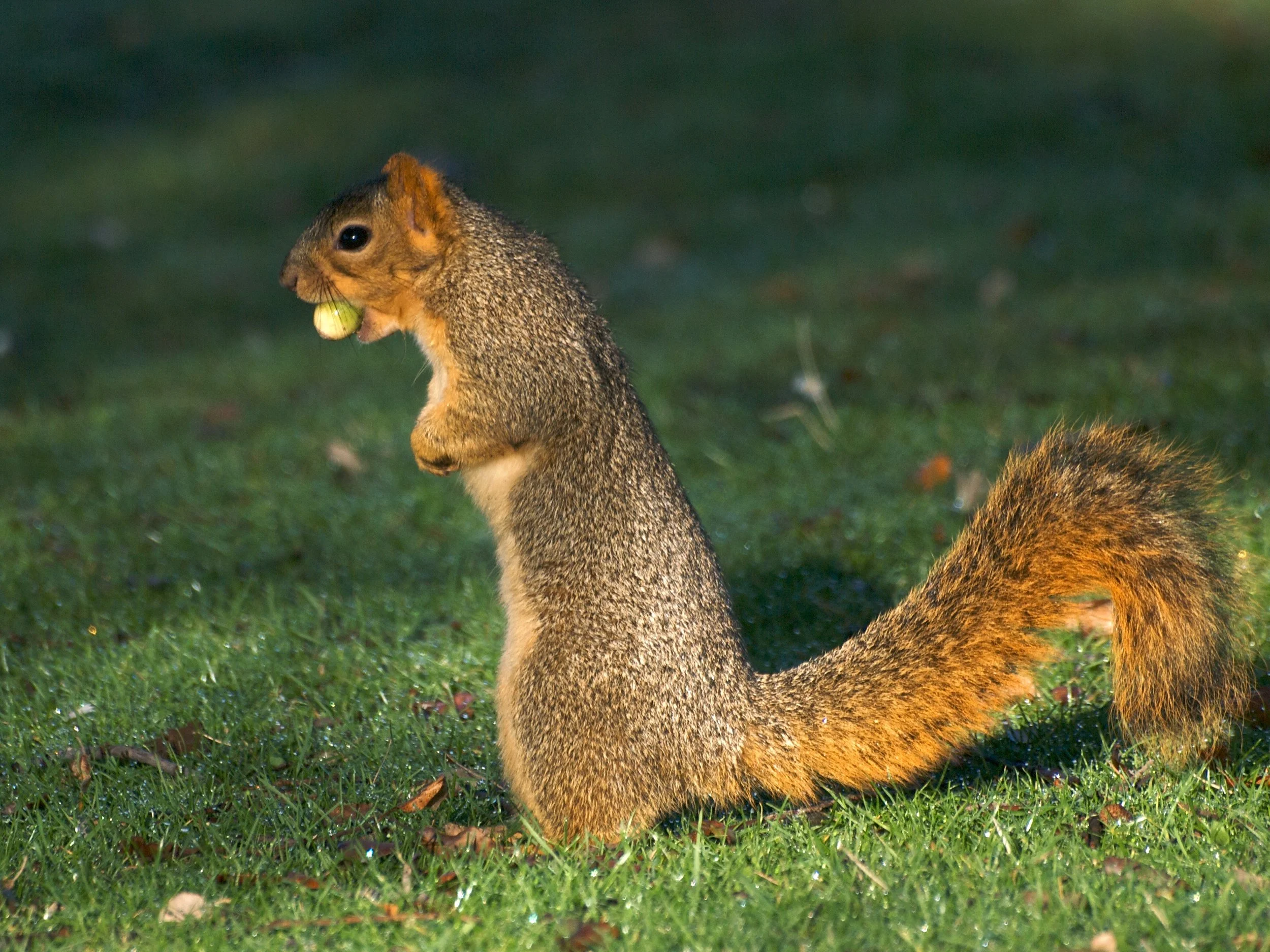
By Ingrid Taylar from San Francisco Bay Area - California, USA - Acorn Squirrel, CC BY 2.0, https://commons.wikimedia.org/w/index.php?curid=8453121.
The squirrels’ appetites for red oak acorns result in higher Red Oak acorn germination than uneaten acorns. Not to mention the work that squirrels put in burying acorns in the fall, only to forget where they are that winter, allowing a new tree to reveal itself in the spring. Surprisingly enough, blue jays are responsible for more acorns making their way into the ground than squirrels. Many bird species, like the Blue Jay (Cyanocitta cristata), cache their food. We just aren't always as good at catching birds burying their haul as we are at catching our furry squirrel friends.
Their reproductive timing also means that Red Oaks are adapted to enduring cold, moist stratification before germination by having dormant embryos. Winter provides ideal conditions in nature, but for growers, it means moist media at 30 to 40 degrees Fahrenheit for 3 months to ensure seed dormancy is broken.
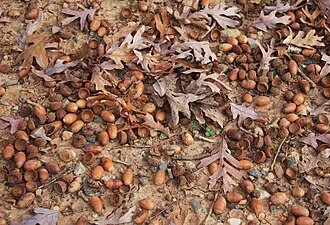
White Oaks drop their acorns in the spring, have less tannins, and therefore are typically predated more heavily than Red Oaks. White Oaks are a welcome spring treat for many animals and announce the arrival of more food soon to follow. All Oak species are considered recalcitrant, meaning their seed has to stay moist and cannot freeze, or they will experience embryo death.
Oaks not only support life as a food source, but in savannas and prairies, Oaks are a much needed source of shade. The shade Oaks provide encourages more biodiversity on the landscape, acting as a haven for plants that require part-sun and some shade plants. Oaks’ root systems also help keep soil in place and provide a network of nutrient exchange via the pipeline of mycelial activity under the surface. The shedding of Oaks’ leaves every fall adds essential nutrients back into the ecosystem and provides shelter for the microfauna on the ground. Due to their ability to support wildlife systems, Oaks are a prime candidate for restoration efforts. However, establishing healthy Oak populations in restoration areas is a challenging venture.
Part II - SGI’s Native Plant Materials Program increasing Oaks on the Landscape
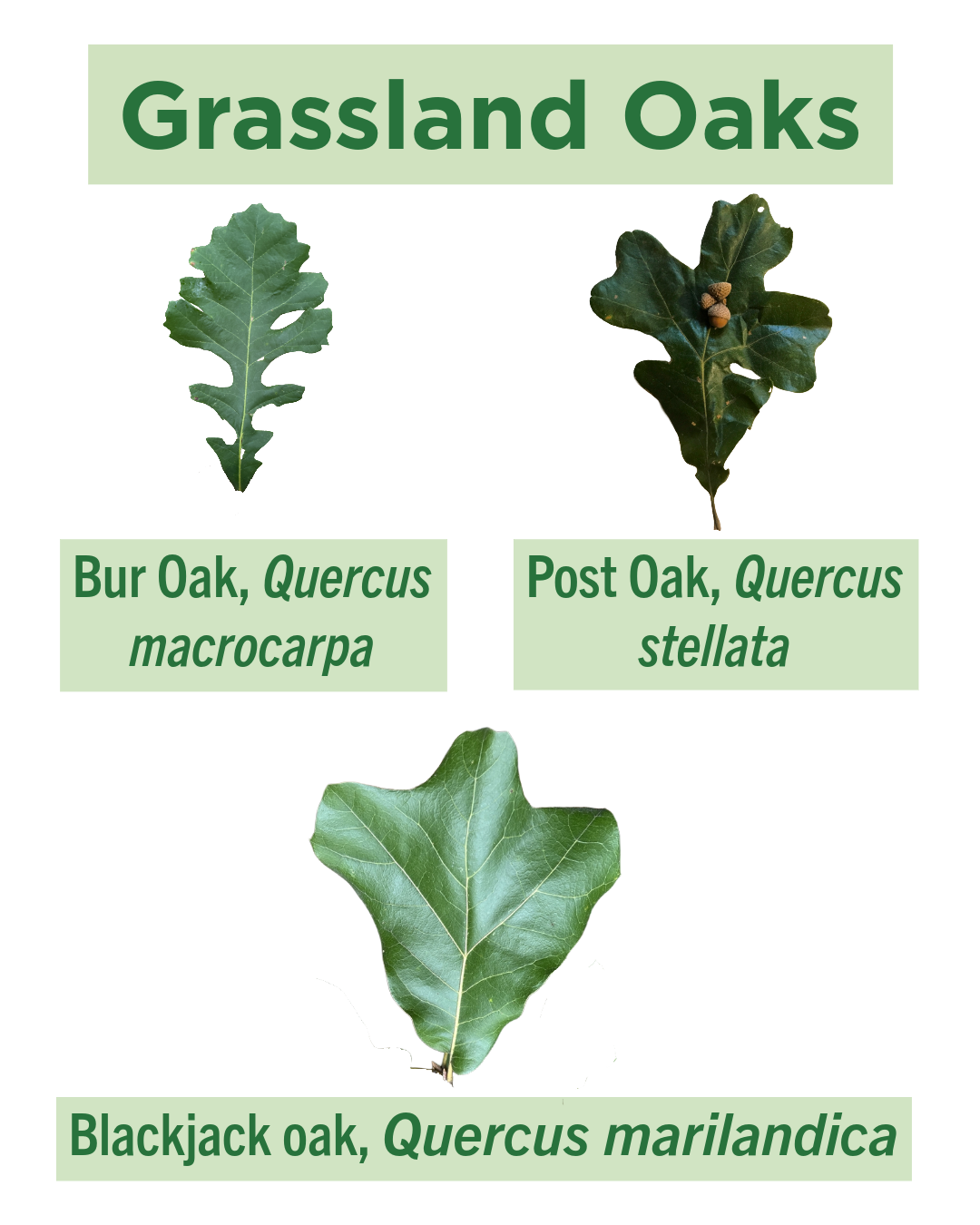
Diagram of three types of grassland Oak species SGI’s Native Plant Materials Program is studying.
SGI’s Native Plant Materials Program has selected three species for greenhouse production to aid in the Oak market drought: Bur Oak (Quercus macrocarpa), Post Oak (Quercus stellata), and Blackjack Oak (Quercus marilandica). Each of these Oaks present different challenges for producers. Bur Oaks have a deeply tap rooted to ensure they remain stable in the wet soils they tend to inhabit. They are likely to become rootbound if kept in a pot for more than two years. Post Oaks are generally considered easy-to-grow but grow very slowly. Their root systems are diffuse or fibrous, meaning they grow laterally rather than downward. This lateral root growth can quickly become an issue if the oak is kept in a pot for more than four years. Blackjack Oaks, which are Red Oaks, pose a different challenge due to their winter-resistant dormant embryos. Additionally, growers can struggle to find the perfect watering schedule and soil media for Blackjack Oaks. As a xeric species, they cannot be overly saturated with water. Blackjack Oaks are also known to be slow growers, even slower than Post Oak! Many times, size truly matters when adding transplants into a restoration site, and size = time. Your typical tree at a nursey will spend an average of three to ten years growing behind the scenes before they are available for purchase. This time range is simply too long to contain the root systems for many of the Oak species that are desperately needed for restoration. This is an issues that many people, including SGI, are working to solve.
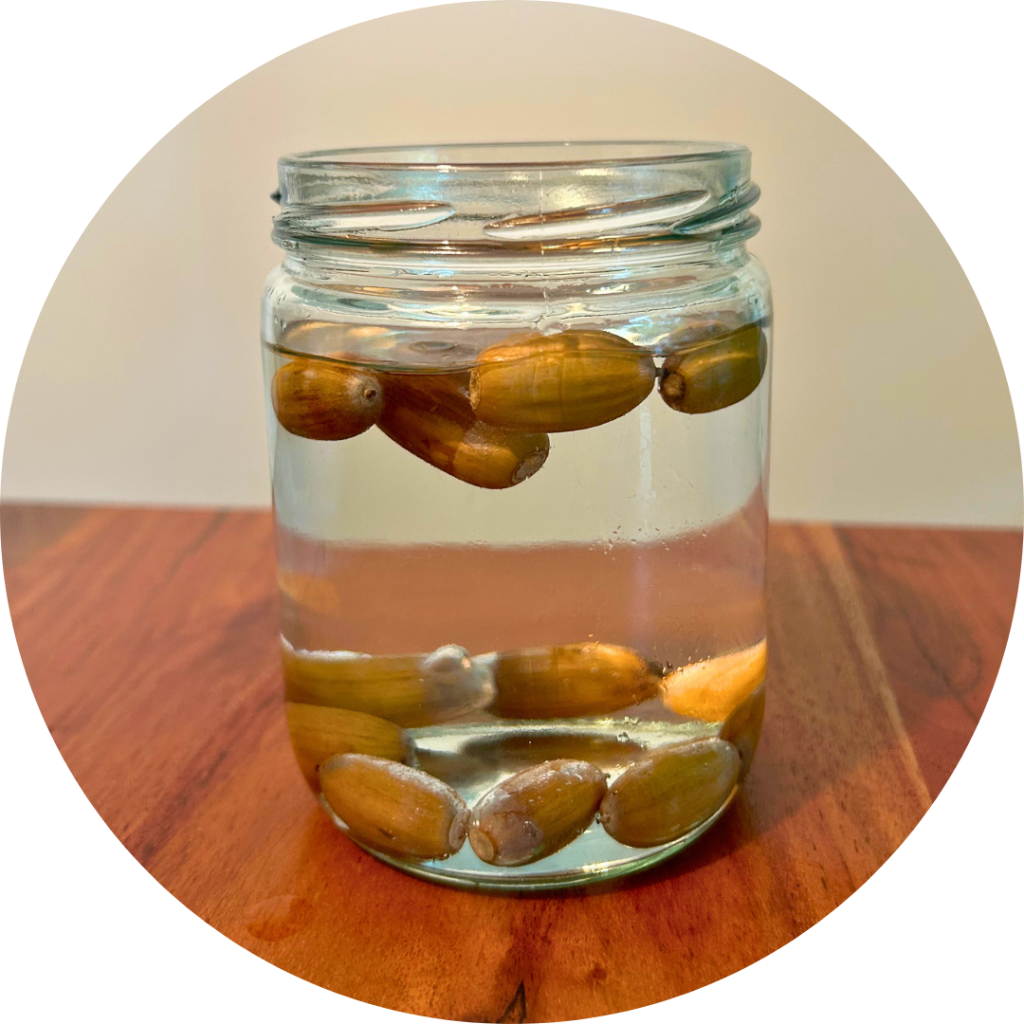
Image of an acorn float test. Source.
Both the Bur and Post Oaks were collected on two sites in Clarksville, TN; the Blackjack Oaks were a generous donation from Harry Babb and Shea Staten of Mississippi. After collection, all of the acorns were tested for viability using a “float test” (see image to the right). Acorns don’t only look tasty to birds and mammals, but many species of insects. Insects will enter the acorn and consume the endosperm an acorn soon after it falls from the tree. The burrow holes left by the insect allow air inside of the shell, which causes the unviable acorns to float on top of the water. Unviable acorns were returned back to the landscape to allow for these insects to finish out their lifecycles.
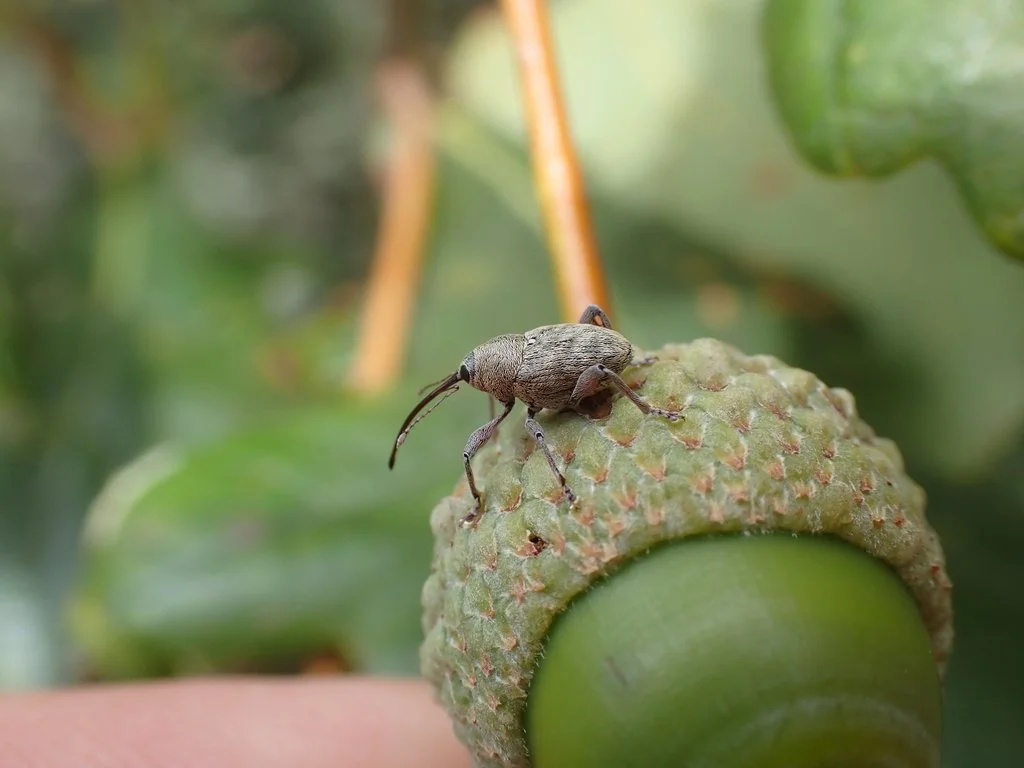
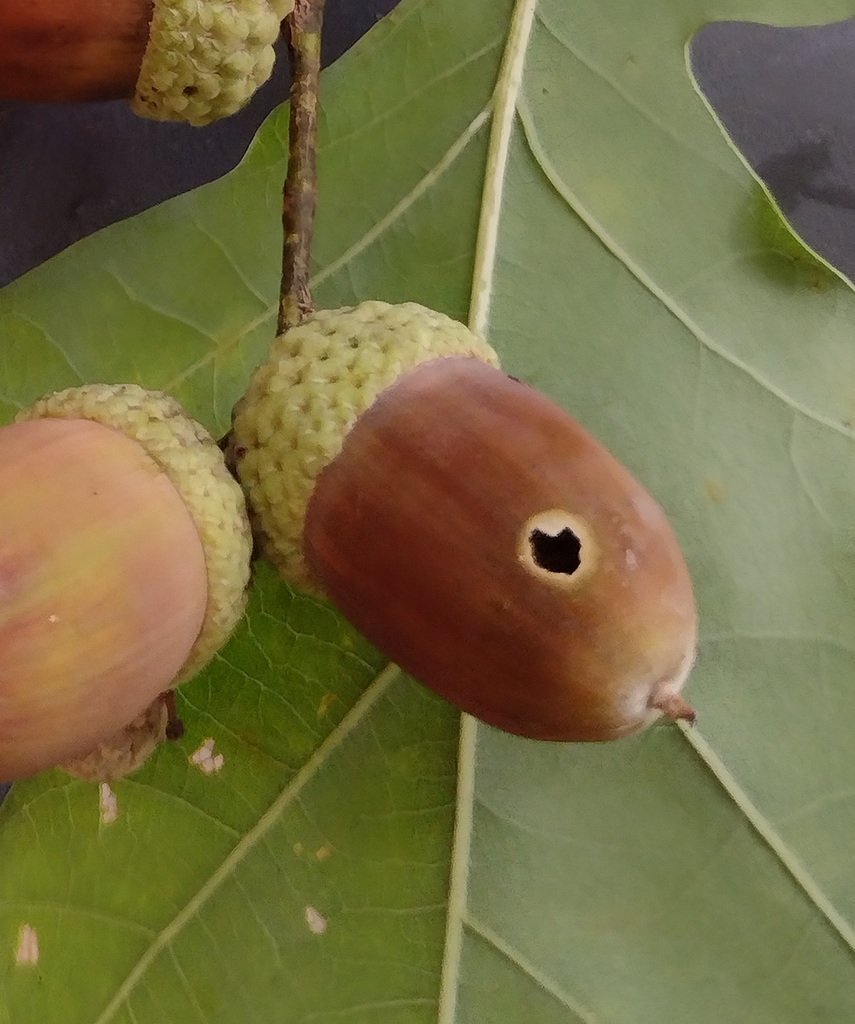
After we have ensured the acorns are viable, the media is next! All of these Oaks prefer different soil moisture and therefore structure. In order of the moist-loving wet mesic to driest xeric, the Bur Oak, Post Oak, and finally Blackjack Oak. Each required a different media-mixture of peat-based soil, perlite, and sand to fit their particular needs.
SGI is a learning institute, and these oaks provided an opportunity to test the best germination conditions for these species. Acorns were split into two groups: a cold, moist stratification group and a warmer control group. Half of the acorns of each species were maintained at 10 to 15 degrees Celsius (50F to 59F) and the other half at 15 to 25 degrees Celsius (59F to 77F) for 3 months. The results are below:
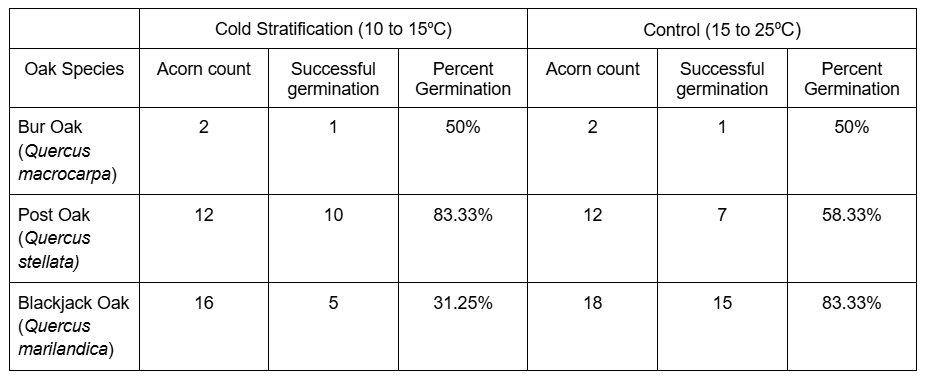
Chart displaying records of three oak species germination trials including amount of acorn in the trials, germination rates, and comparison of cold stratified acorns and control acorns. Preliminary trials show the importance of cold stratification at 10 to 15 degrees Celsius in successful oak germination.
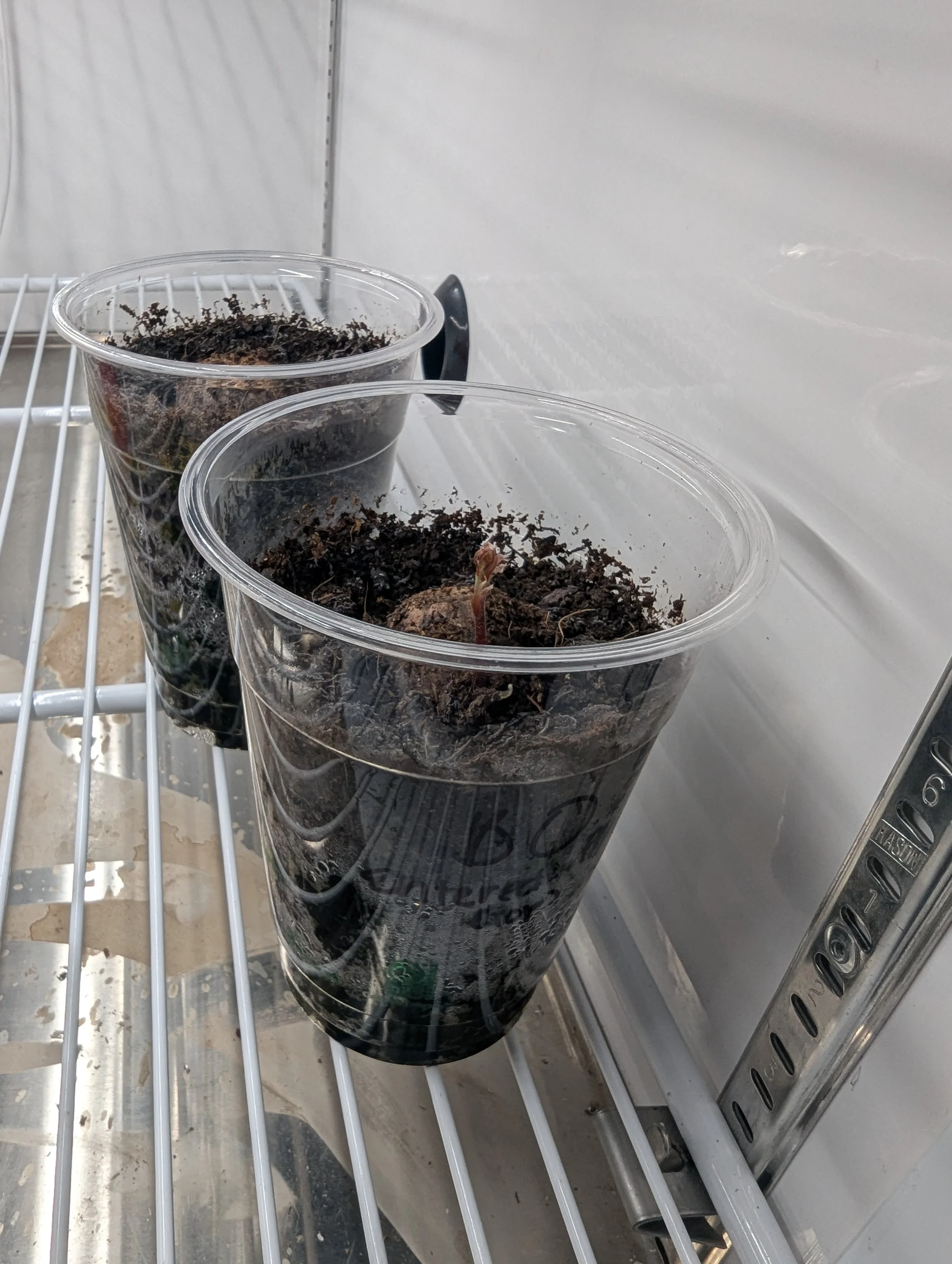
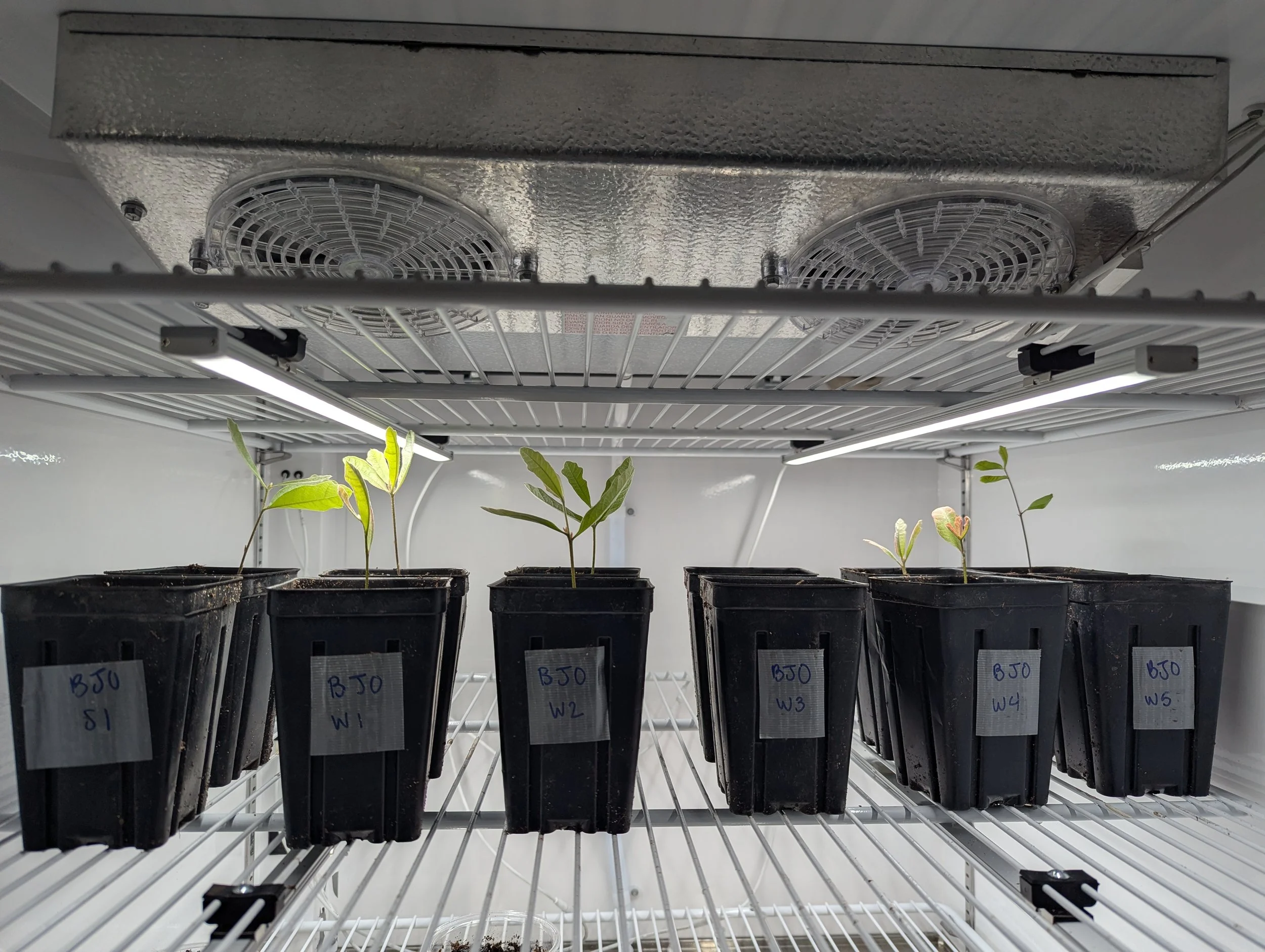
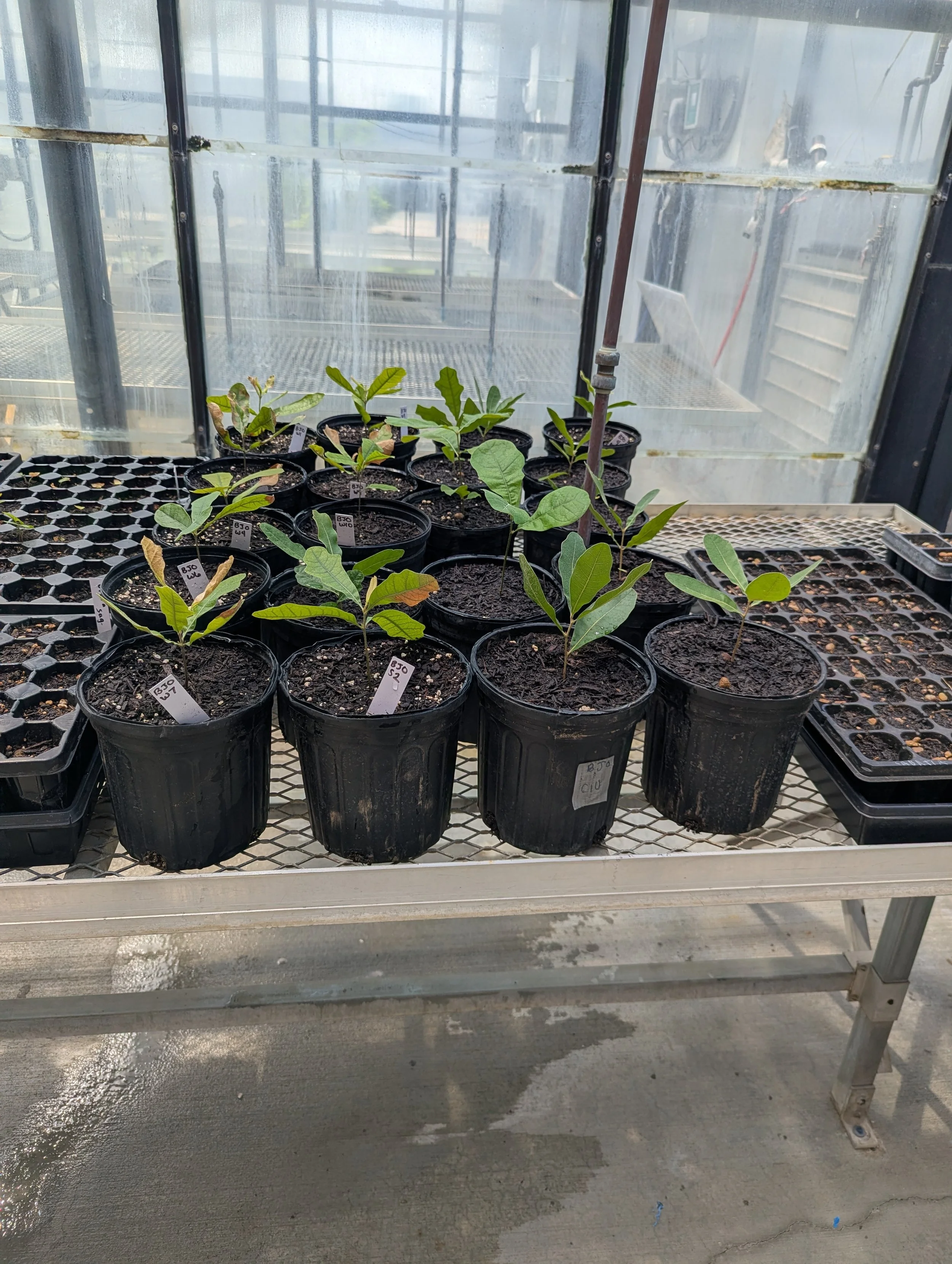
From left to right: 1. Blackjack Oak acorns growing in in media. 2. Blackjack Oak germination in the growth chamber. 3. Three-month old Blackjack Oak saplings potted and growing in the greenhouse.
It’s not the end of the story for our Oaks! After their 4 week germination trial period, all the Oaks were moved to 15-25oC to mimic the coming of spring and to encourage the appearance of the cotyledon (first green growth point that breaks the surface). To date, our survival rates are:
Bur Oak (Quercus macrocarpa) - 100% Survival Rate
Post Oak (Quercus stellata) - 45% Survival Rate
Blackjack Oak (Quercus marilandica) - 70.58% Survival Rate
All of these plants are alive and well, but there have been some challenges! The peat-based media used in the germination phase and first potting caused the soil to have an excessively low pH. This issue was most evident in our Post Oak and Blackjack Oak saplings. After amending the media, the pH has neutralized, and we have seen a tremendous increase in leaf number and vigor. These Oaks will experience a substantial increase in pot size in the coming week, and likely another this summer as they wait to be planted out this fall. All of the Oaks are currently housed at the Sundquist Greenhouse on Austin Peay State University’s campus, but will be moved to SGI restoration sites in the Interior Lower Plateau this fall.
Post written by SGI Native Plant Materials Program’s Ashton Crowe. Post prepared by Eleanor Lopez, SGI Communications Specialist.